
Furnace Inverter Size: 1000W vs 1500W for Power Outages
Date:2026-10-19 Click:7 Source:Rogerele
Quick answer: Most gas furnaces with an ECM (variable-speed) blower or a 1/3 HP blower run on a 1000W pure sine wave inverter during a power outage, because the whole furnace usually draws about 300 to 700W while running. Choose 1500W for a 1/2 HP PSC blower, which can surge to 1,800 to 2,700W at start-up, or when you also want a fridge, Wi-Fi and lights on the same inverter. At 12V, a 600W furnace load pulls about 56A from the battery, so battery size, not inverter size, decides how many hours of heat you get.
The problem shows up on the first cold night without grid power: the gas is still flowing, but the furnace will not start because its blower, inducer motor, igniter and control board all need 120V AC. A cheap modified sine inverter can make blower motors run hot and noisy and can confuse electronic control boards, so a pure sine wave inverter is the safer choice. This guide adds up real furnace loads, compares two 12V pure sine models, the REP1000-121 and the REP1500-121, and shows how much battery each furnace type needs.
What a gas furnace actually draws
A gas furnace does not use electricity for heat; the gas burner does that. Electricity runs the motors and controls, and they start in a sequence: the inducer motor clears the flue, the igniter glows for 30 to 60 seconds, the gas valve opens, the igniter switches off, and the blower starts after a short delay. That sequence matters, because the highest surge comes when the blower motor starts, not when everything runs together. The figures below are typical ranges; always check the nameplate on your own furnace and blower.
| Furnace part or load (120V) | Typical watts | 12V DC current (approx.) | 1000W | 1500W |
|---|---|---|---|---|
| Control board and thermostat transformer | 10 to 30W | 1 to 3A | Yes | Yes |
| Draft inducer motor | 50 to 150W | 5 to 14A | Yes | Yes |
| Hot surface igniter (30 to 60 seconds) | 300 to 500W | 28 to 46A | Yes | Yes |
| ECM variable-speed blower | 75 to 500W, depending on speed | 7 to 46A | Yes | Yes |
| PSC blower, 1/3 HP | 400 to 600W, start surge 2 to 3 times higher | 37 to 56A | Yes | Yes |
| PSC blower, 1/2 HP | 600 to 900W, start surge about 1,800 to 2,700W | 56 to 83A | Marginal | Yes |
| Fridge (running), plus Wi-Fi router and LED lights | 130 to 280W, fridge start surge up to about 1,000W | 12 to 26A | Only with an ECM furnace | Yes |
When 1000W is enough
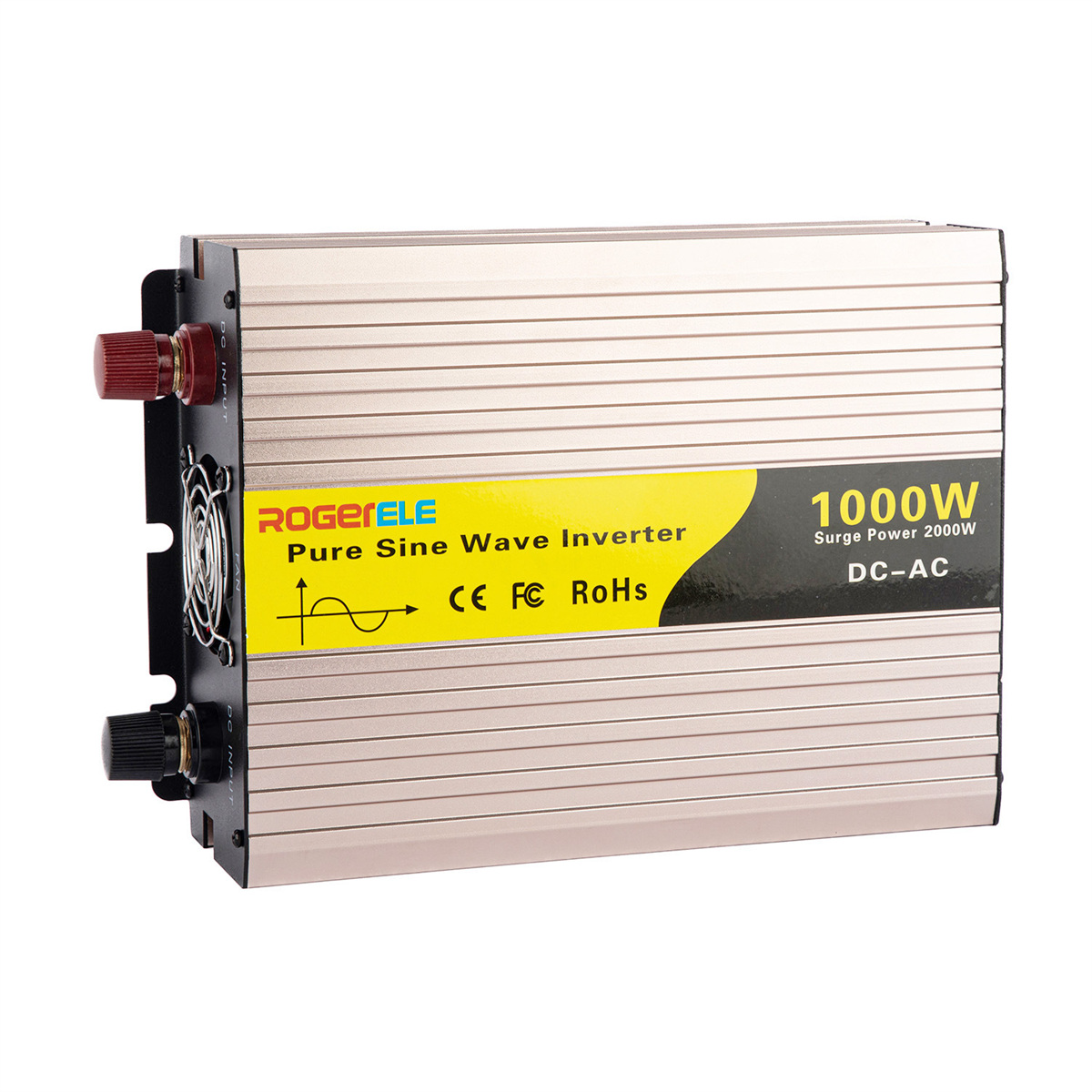 A furnace with an ECM blower, or a smaller furnace with a 1/3 HP PSC blower, usually draws 300 to 700W when the burner and blower are both on. The REP1000 pure sine wave inverter is rated 1000W continuous with a 2000W peak and less than 3% THD on a linear load, which covers that running load and a 1/3 HP motor start. The 12V model (REP1000-121) lists no-load current under 0.4A, about 5W, so leaving it on all night costs very little battery. It measures 275 × 180 × 80 mm and weighs 2.5 kg, small enough to sit on a shelf next to the furnace and battery.
Keep a 20% margin
Plan for the furnace to use no more than about 800W of the 1000W rating. That leaves room for the blower start and for a phone charger or a few LED lights, but not for a fridge compressor starting at the same moment.
When to choose 1500W
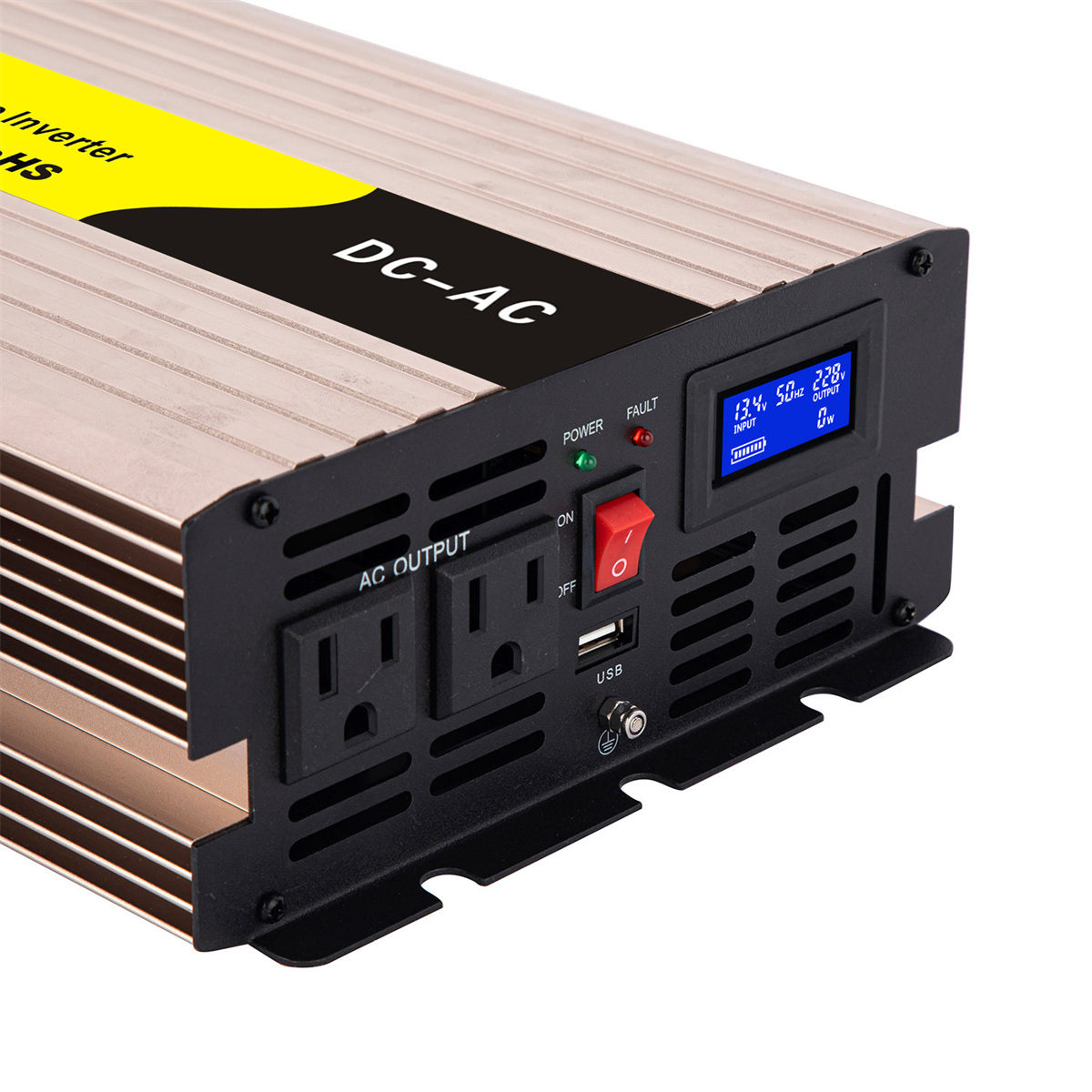 Older and larger furnaces often use a 1/2 HP PSC blower that runs at 600 to 900W and can surge to about three times that for a moment. The REP1500 pure sine wave inverter is rated 1500W continuous with a 3000W peak, so it starts that motor with room to spare. It is also the better choice if one inverter must keep the fridge, internet and lights running alongside the furnace. The 12V model (REP1500-121) lists no-load current under 0.8A, about 10W, and measures 310 × 180 × 80 mm at 2.9 kg.
Do not size up just to be safe
A 2000W or 3000W inverter will run a furnace too, but it costs more, idles higher and needs heavier 12V cables. If your largest real load with surge stays under 3000W peak and 1500W running, 1500W is the right size.
REP1000-121 vs REP1500-121 specifications
| Specification | REP1000-121 | REP1500-121 |
|---|---|---|
| Rated / peak output | 1000W / 2000W | 1500W / 3000W |
| Waveform / THD | Pure sine, <3% linear load | Pure sine, <3% linear load |
| DC input / operating range | 12V / 10 to 15.5V | 12V / 10 to 15.5V |
| AC output (US version) | 100 / 110 / 120V ±5%, 60Hz available | 100 / 110 / 120V ±5%, 60Hz available |
| Max efficiency (12V) | 90% | 90% |
| No-load current | <0.4A | <0.8A |
| Low-voltage alarm / cutoff | 10.5V / 10V | 10.5V / 10V |
| Approx. battery current at full load | about 93A | about 139A |
| Size / net weight | 275 × 180 × 80 mm / 2.5 kg | 310 × 180 × 80 mm / 2.9 kg |
| Best furnace match | ECM blower or 1/3 HP PSC blower | 1/2 HP PSC blower, or furnace plus fridge |
| Listed warranty | 2 years | 2 years |
How many hours of heat from a battery?
In cold weather a furnace often cycles on about half the time, so average power is roughly half the running watts. Divide by about 0.9 for inverter efficiency and add the idle draw. A 12V 100Ah LiFePO4 battery stores about 1,280Wh, and about 1,150Wh of that is practical to use.
- ECM furnace, about 350W running: 175W average, about 200Wh per hour from the battery. A 12V 100Ah battery gives roughly 5.5 to 6 hours; 200Ah gives about 11 hours.
- 1/2 HP PSC furnace, about 820W running: 410W average, about 465Wh per hour from the battery. A 12V 100Ah battery gives roughly 2.5 hours; 200Ah gives about 5 hours.
For a full 24 hours with a PSC blower you would need about 11kWh, which is more practical on a 24V or 48V bank. The REP1000 and REP1500 are also built in 24V and 48V versions (REP1000-241/481, REP1500-241/481).
Connecting the furnace safely
- Most furnaces are hardwired on their own 120V circuit. Have an electrician install a transfer switch, or a furnace transfer switch with a power inlet, so the inverter feeds the furnace without back-feeding the grid. Never use a double-male cord. Our article on connecting an inverter to house wiring explains the options.
- Some furnace control boards check polarity and the neutral-to-ground reference before they light. If the furnace locks out with a flame-sense error on inverter power, ask your electrician to check the grounding at the transfer point.
- Keep the inverter and battery dry and ventilated, within 1 to 2 meters of each other, and fuse the positive cable near the battery. The listed operating temperature is −10°C to +50°C.
- The REP series is an inverter only, with no built-in charger, so plan to recharge the battery from a charger, a vehicle or solar between outages.
FAQ
Why does a furnace need a pure sine wave inverter?
Blower motors and electronic control boards are designed for grid-like AC. A modified sine output can make motors run hotter and louder and can upset control electronics, while pure sine output with under 3% THD behaves like utility power.
Can a 1000W inverter run a furnace and a fridge?
With an ECM furnace drawing about 350W and a fridge at 100 to 200W running, usually yes, as long as the fridge compressor and blower do not start at the same instant. With a PSC blower, choose 1500W.
Can I run an electric furnace or heat pump this way?
No. Electric resistance furnaces and heat pumps draw several thousand watts and usually need 240V, which is outside what a 1000W or 1500W 120V inverter can supply.
12V or 24V for home backup?
12V is fine for a few hours of furnace backup. For all-night or full-day backup, 24V halves the current, so the 1500W model draws about 70A instead of 139A at full load.
Conclusion
For a gas furnace during a power outage, pick 1000W if your furnace has an ECM or 1/3 HP blower and runs alone, and pick 1500W if it has a 1/2 HP PSC blower or must share the inverter with a fridge and lights. Then size the battery for the hours of heat you need. Compare the full specifications of the REP1000 pure sine wave inverter and the REP1500 pure sine wave inverter, and for quotes, OEM options or custom DC input voltages, contact us: email Long@rogerele.com, Tel +86-577-62769701, WhatsApp +86-13587757588.
