
Semi Truck Inverter Size: 2000W or 3000W for a Sleeper Cab
Date:2026-10-13 Click:24 Source:Rogerele
Quick answer: For most semi truck sleeper cabs, a 2000W pure sine wave inverter is the right size if you run one heating appliance at a time: a microwave, coffee maker or electric kettle, plus a fridge, TV and laptop. Choose 3000W when you want the microwave and coffee maker together, an induction cooktop next to the fridge, or a larger 120V refrigerator with a high starting surge. On a 12V truck system, 2000W draws about 185A and 3000W about 278A, so the inverter must be hardwired to the battery bank with heavy cable and a fuse.
Long-haul drivers spend 10-hour breaks in the sleeper, and many states and cities limit engine idling to a few minutes. That pushes cooking, entertainment and device charging onto the truck batteries. The common mistake is buying an inverter by the biggest number on the box, or a 1000W unit that trips the moment the microwave starts. Size the inverter by the real AC loads you use together, then check that the batteries and cables can carry the DC current.
What a sleeper cab inverter has to run
Read the watt label on each appliance. If it only lists amps, multiply by 120V. Microwave labels show cooking power; the input watts on the back plate are what the inverter supplies, usually 1.5 to 1.7 times the cooking watts. DC current below uses watts ÷ (12V × 0.9) for about 90% inverter efficiency.
| AC load in a sleeper cab | Typical watts | 12V DC current (approx.) | 2000W | 3000W |
|---|---|---|---|---|
| Laptop and phone chargers | 60 to 120W | 6 to 11A | Yes | Yes |
| TV 32 to 40 inch plus streaming box | 50 to 100W | 5 to 9A | Yes | Yes |
| 120V compact fridge (running) | 60 to 150W, start surge 3 to 5 times higher | 6 to 14A | Yes | Yes |
| Electric blanket | 100 to 200W | 9 to 19A | Yes | Yes |
| Coffee maker | 600 to 1,000W | 56 to 93A | Yes | Yes |
| Microwave, 700 to 900W cooking | about 1,100 to 1,500W input | 102 to 139A | Yes, alone | Yes |
| Induction cooktop, single zone | 1,500 to 1,800W | 139 to 167A | Yes, alone | Yes, with fridge and TV |
| Microwave plus coffee maker together | about 1,700 to 2,500W | 157 to 231A | Often overloads | Yes |
Space heaters and hair dryers draw 1,500W or more for long periods. They can run on a 3000W inverter, but they empty a battery bank fast, so most drivers use a diesel bunk heater instead.
When 2000W is enough
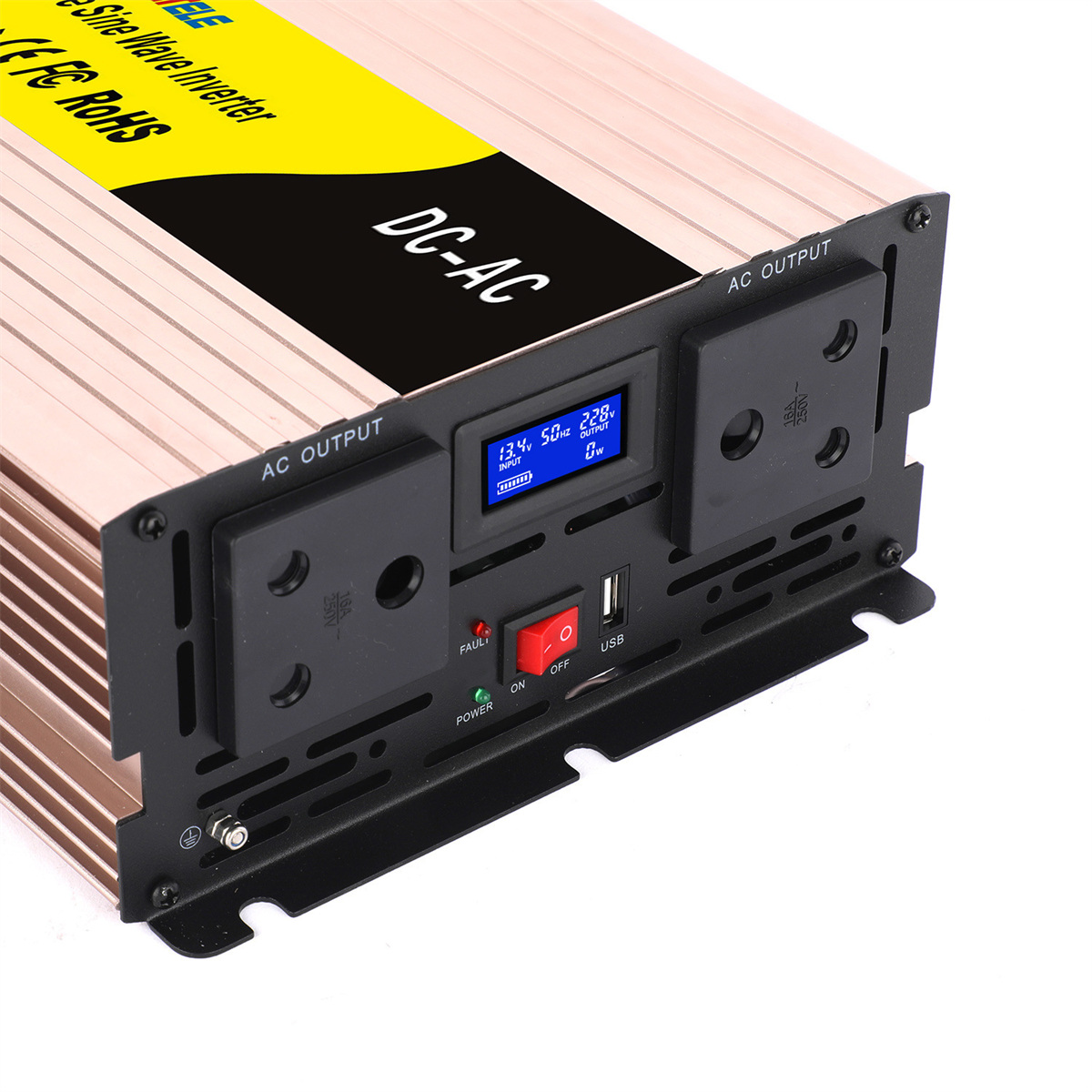 A 2000W unit covers the typical solo driver who heats lunch in the microwave, makes coffee in the morning and keeps a fridge, TV and laptop running in between. The REP2000 pure sine wave inverter is rated 2000W continuous with a 4000W peak, which leaves room for a fridge compressor start next to a 1,200W microwave. It measures 355 × 205 × 95 mm and weighs 3.9 kg, small enough to mount under the bunk or in a side box. The 12V version draws less than 0.9A at no load, and listed maximum efficiency is 90% / 92% / 95% for the 12V / 24V / 48V versions.
The one-heater rule
With 2000W, run one heating load at a time. Turn the coffee maker off before starting the microwave, and the inverter will not hit overload protection.
When to step up to 3000W
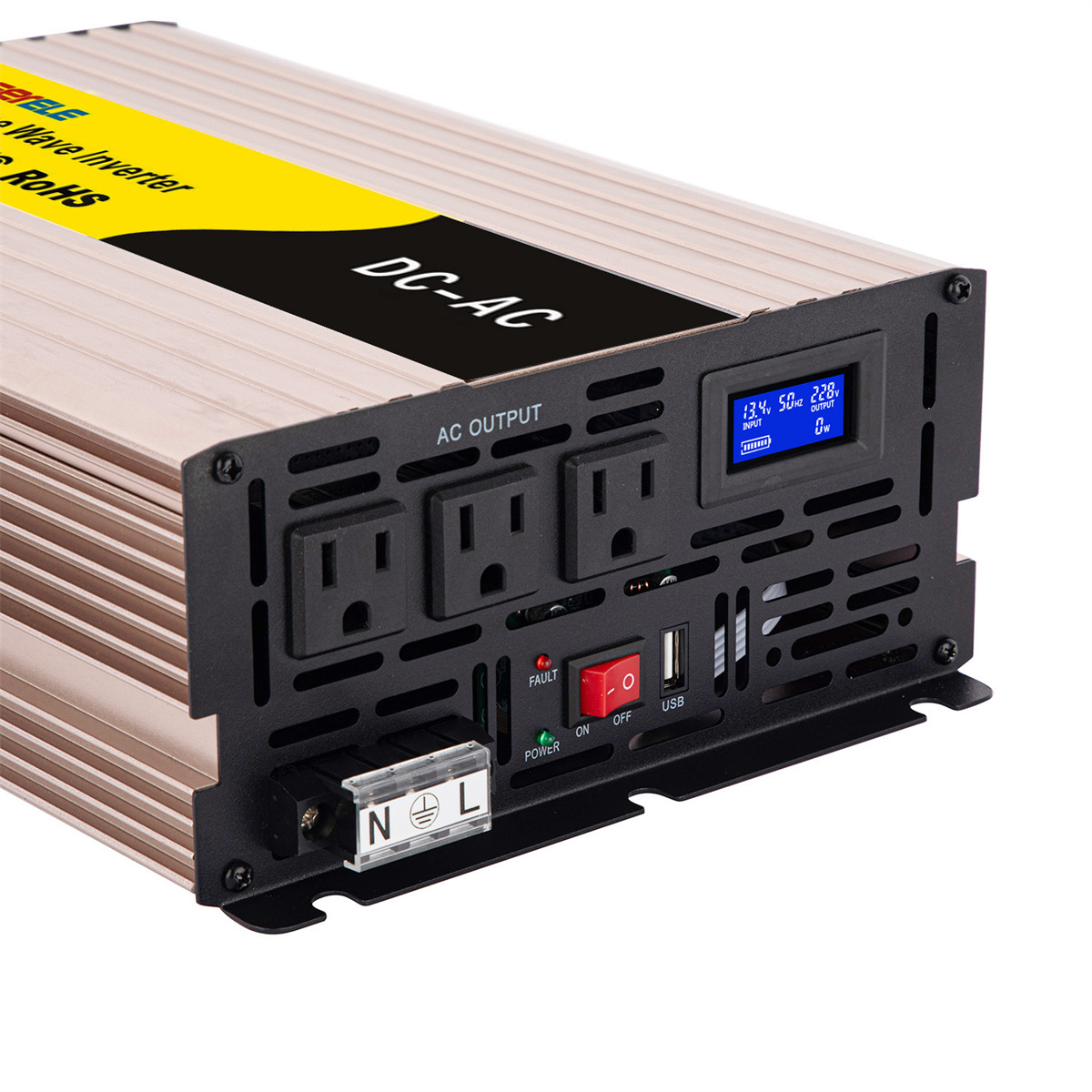 Pick 3000W when two drivers share the cab, when you cook on induction while the fridge and TV stay on, or when you want the microwave and coffee maker running at the same time. The REP3000 pure sine wave inverter is rated 3000W continuous with a listed 6000W peak and THD below 3% on a linear load. It measures 415 × 205 × 95 mm and weighs 4.95 kg net. The 12V version (REP3000-121, 100/110/120V output) accepts 10 to 15.5V and draws less than 1A at no load. The 12V low-voltage alarm is 10.5 ±0.5V, cutoff 10 ±0.5V and recovery 12.3 ±0.5V, and the 12V and 24V versions include a QC3.0 USB port. The product page lists a 2-year warranty.
Batteries: the real limit in a semi truck
Most US semi trucks run a 12V system with several starting batteries in parallel. Starting batteries are built for short, high bursts, not deep daily discharge. A rough evening on the inverter looks like this:
| Use during a 10-hour break | Watts × time | AC energy | From battery (÷0.9) |
|---|---|---|---|
| Microwave, two meals | 1,300W × 0.2h | 260Wh | about 289Wh |
| Coffee maker, morning | 900W × 0.15h | 135Wh | about 150Wh |
| Fridge, cycling | 100W avg × 10h | 1,000Wh | about 1,111Wh |
| TV and laptop, 4 hours | 150W × 4h | 600Wh | about 667Wh |
| Total | about 1,995Wh | about 2,217Wh |
About 2,200Wh is roughly 185Ah at 12V. Taking that from starting batteries risks a no-start morning, so many fleets add a separate house bank: a 12V 200Ah LiFePO4 bank stores about 2,560Wh and covers this example with a small margin. Charge it from the alternator through a battery isolator or DC-DC charger while driving. Our guide can my car alternator run a power inverter while driving explains how much alternator capacity is really free.
Wiring a 2000W or 3000W inverter in a truck
At 12V, a full 2000W load pulls about 185A and 3000W about 278A. Keep DC cables short, size them for that current and the run length, and put a fuse or breaker on the positive cable close to the battery. Bond the inverter chassis ground to the truck frame, mount it where the cooling fan has open air, and keep it away from engine heat and road spray. Never run a 2000W or 3000W inverter from a 12V accessory socket. If your truck or build uses a 24V bank, the REP2000 and REP3000 24V versions roughly halve the DC current.
REP2000 vs REP3000 for a sleeper cab
| Item | REP2000 (12V) | REP3000 (12V) |
|---|---|---|
| Continuous / peak output | 2000W / 4000W | 3000W / 6000W |
| Waveform / THD (linear load) | Pure sine / <3% | Pure sine / <3% |
| DC current at full load, 12V | about 185A | about 278A |
| No-load current | <0.9A | <1A |
| 12V input range | 10 to 15.5V | 10 to 15.5V |
| Max efficiency (12/24/48V) | 90% / 92% / 95% | 90% / 92% / 95% |
| Size / net weight | 355 × 205 × 95 mm / 3.9 kg | 415 × 205 × 95 mm / 4.95 kg |
| Best for | Solo driver, one heating load at a time | Team drivers, induction, microwave plus coffee |
FAQ
Will a 2000W inverter run a semi truck microwave?
Yes. A 700 to 900W microwave draws about 1,100 to 1,500W input, which fits 2000W if no other heating appliance is on.
Can I run the inverter all night on the starting batteries?
Small loads such as a laptop and TV are usually fine for a few hours. A fridge running all night plus cooking can take about 185Ah, so use a separate house bank if you need a reliable start.
Why pure sine wave in a truck?
Microwaves, fridge compressors, CPAP machines and laptop chargers run cooler and quieter on a clean sine wave with low THD.
Is 3000W too big for one driver?
Not if the cables and fuse are sized for 278A, but the 12V no-load draw is a little higher. Turn it off when you do not need AC.
Which output version should a US truck use?
Order the 100/110/120V version with US outlets, such as REP3000-121 for a 12V system.
Conclusion
For a semi truck sleeper cab, start with a 2000W pure sine wave inverter if you run one heating appliance at a time, and choose 3000W for team cabs, induction cooking or microwave plus coffee together. Plan for about 185A or 278A at 12V, add a 200Ah-class house battery if you run a fridge overnight, and hardwire the inverter with a fuse near the battery.
See full specifications on the REP2000 pure sine wave inverter and REP3000 pure sine wave inverter pages. For help matching an inverter to a truck fleet, or for distributor and OEM orders, contact us: email Long@rogerele.com, Tel +86-577-62769701, WhatsApp +86-13587757588.
