
Can My Car Alternator Run a Power Inverter While Driving?
Date:2026-10-08 Click:31 Source:Rogerele
Quick answer: Yes, your alternator can run a power inverter while you drive, but only up to a point. A 12V inverter draws roughly 9 to 10 amps of DC current for every 100 watts of AC load, so a 300W load needs about 28A and a 1000W load needs about 93A. Most car alternators can carry a few hundred watts of inverter load on top of the vehicle's own needs. Bigger loads, long idling, or a 1500W to 2000W inverter usually need a high-output alternator, a second battery, or a 24V truck system.
Whether you run a laptop on the highway, a fridge in a work truck, or power tools from a van, the real question is the same: can the charging system put back what the inverter takes out? This guide shows how to work it out with simple math.
How much current does an inverter pull from the alternator?
An inverter turns DC battery power into AC power, and it loses some energy as heat. A simple estimate is:
DC amps = AC watts ÷ battery voltage ÷ inverter efficiency
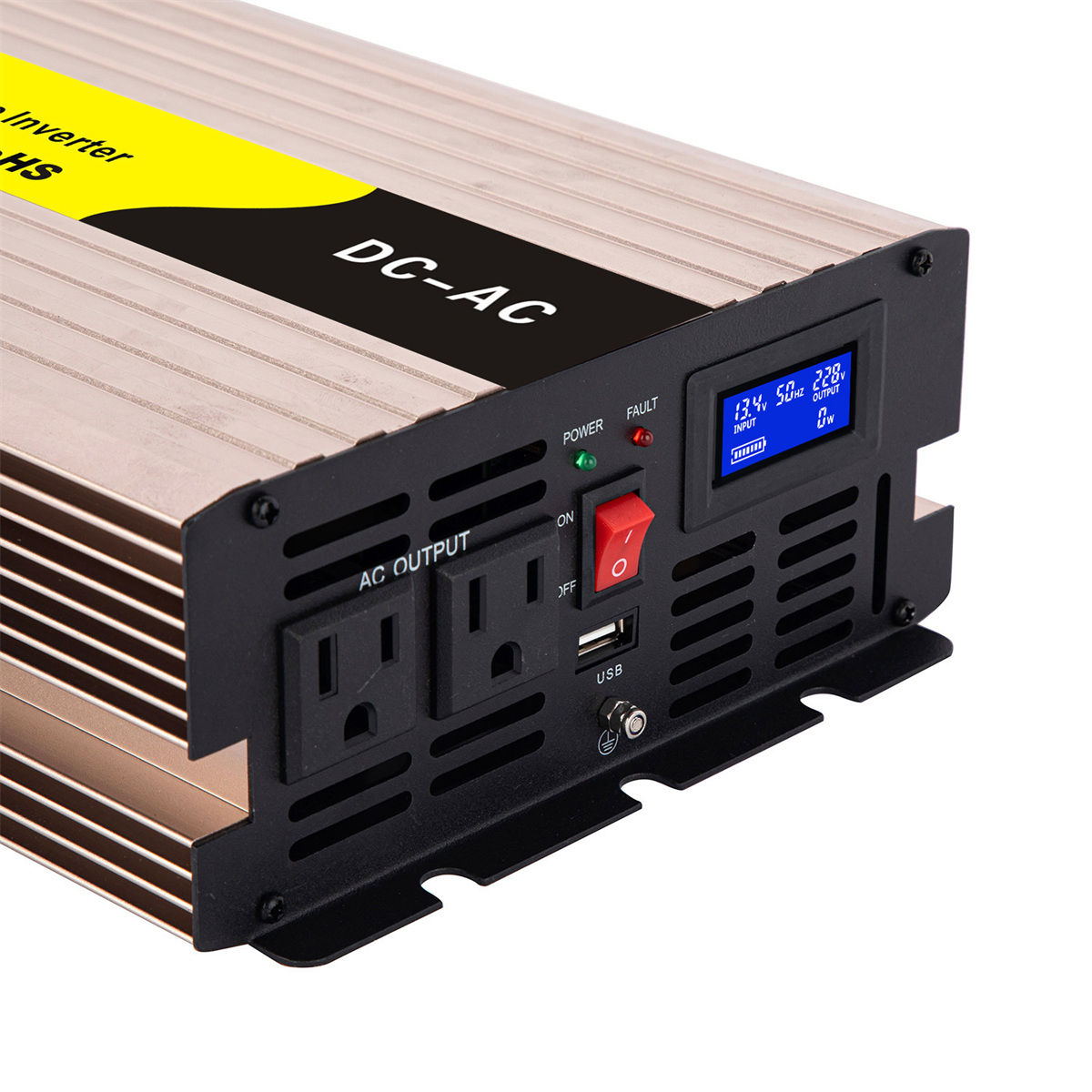
Our REP1500 1500W pure sine wave inverter lists a maximum efficiency of 90% for the 12V version and 92% for the 24V version. Using those figures and nominal 12V and 24V gives these approximate currents:
| AC load | Example | 12V system (about 90%) | 24V system (about 92%) |
|---|---|---|---|
| 150W | Laptop and phone chargers | about 14A | about 7A |
| 300W | Small fridge or TV | about 28A | about 14A |
| 500W | Fridge plus laptop and lights | about 46A | about 23A |
| 1000W | Small microwave or coffee maker | about 93A | about 45A |
| 1500W | Kettle, larger microwave | about 139A | about 68A |
| 2000W | Heavy tools, several loads at once | about 185A | about 91A |
Real efficiency changes with load, so treat these as planning numbers. They do show why 24V trucks handle big inverters so much more easily: the same AC load needs about half the current.
How big is my alternator, and how much of it is free?
The alternator rating is usually printed on its label or listed in the vehicle specs, in amps. Passenger cars and light trucks commonly have alternators somewhere in the 100A to 220A range, but check your own vehicle. Three things reduce what is actually free for an inverter:
- The vehicle's own loads. Engine electronics, fuel pump, lights, the heater or A/C blower, wipers and heated seats can take a large share of the rating.
- Engine speed. An alternator makes much less current at idle than at cruising speed. A setup that works on the highway can drain the battery in a traffic jam.
- Heat. Alternators under the hood lose output when hot, and running one near its maximum for hours shortens its life.
A cautious rule is to plan on using no more than about half of the alternator rating for the inverter, after the vehicle's own loads, unless you have measured otherwise.
So how big an inverter can I run while driving?
Here is a worked example for a 12V pickup with a 150A alternator:
- Vehicle loads at night with lights and blower on: assume about 40A.
- Remaining capacity at cruising speed: about 110A, but keep a margin for heat and idle.
- A comfortable continuous inverter load: about 50A to 60A, which is roughly 500W to 600W of AC.
Short bursts above that, like a microwave running for two minutes, are fine because the battery covers the gap and the alternator refills it afterward. The trouble starts when a large load runs for a long time and the battery voltage keeps falling.
| Typical use while driving | Stock alternator usually OK? | What to consider |
|---|---|---|
| Laptops, phones, camera batteries (under 300W) | Yes | A 300W to 500W inverter is plenty |
| 12V-to-AC fridge, TV, CPAP (300W to 600W) | Often, at cruising speed | Watch battery voltage at idle |
| Microwave or coffee maker in short bursts (1000W to 1500W) | For a few minutes, with the engine running | Heavy cables, good battery, fast-idle if possible |
| Continuous 1500W to 2000W (tools, heaters) | Rarely on 12V | High-output alternator, auxiliary battery, or a 24V system |
How do I know if the alternator is keeping up?
Watch the battery voltage with the engine running and the inverter loaded. On a typical 12V lead-acid system, a running engine usually holds the battery somewhere around 13.5V to 14.5V. If the reading keeps dropping toward 12.5V or lower while you drive, the battery is supplying the difference and will eventually run down.
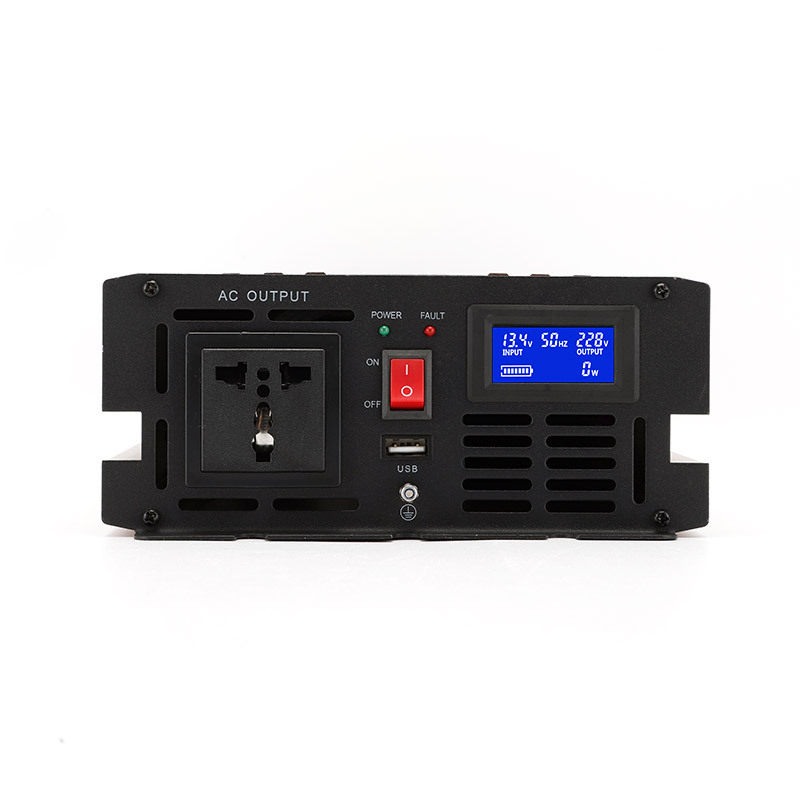
Many inverters show this for you. The REP series has an LCD that displays input voltage, and the 12V REP1500 lists a low-voltage alarm at 10.5V ±0.5V and shutdown at 10V ±0.5V. If you hear the alarm while driving, the load is too big for the charging system. Our guide on whether an inverter drains your battery with the engine off covers the parked side of this question.
What if I need more power than my alternator can give?
Add an auxiliary battery
A second battery, charged through an isolator or a DC-DC charger, lets the inverter take big peaks without pulling the starter battery down. Read more in do I need an auxiliary battery for a car power inverter.
Upgrade to a high-output alternator
Aftermarket high-output alternators are common on work trucks, ambulances and camper vans. Upgrade the charge wire and fusing at the same time.
Use a 24V system where you can
Trucks and buses that already run on 24V can feed a 24V inverter with about half the current. See 12V vs 24V inverter sizing for cars and trucks.
Get the wiring right
At 90A or more, thin cables waste power as heat and make the inverter see low voltage. Connect a 1000W or larger inverter straight to the battery with short, thick cables and a fuse near the battery. Our inverter wire size and fuse guide has the details.
Which Rogerele inverter fits a vehicle charging system?
For most cars on a stock alternator, a 1000W pure sine wave inverter gives room for short peaks while you keep continuous loads modest. The REP1500 comes in 12V, 24V and 48V versions with 100/110/120V or 220/230/240V output, and has 3000W listed peak power for starting loads. For trucks with upgraded charging or 24V systems, the 2000W pure sine wave inverter is a common choice. Pure sine output is the safer match for laptops, CPAP machines, fridges and chargers.
FAQ
Can I plug a 2000W inverter into my car and run it while driving?
On a 12V car, 2000W of continuous load needs around 185A, which is more than most stock alternators can supply. It can handle short peaks if wired to the battery with heavy cables, but plan continuous loads well below that.
Will running an inverter damage my alternator?
Moderate loads are normal. Running an alternator at or near full output for hours, especially at idle or in hot weather, can shorten its life. Keep a margin or upgrade the alternator for heavy daily use.
Is it better to run the inverter with the engine idling?
Idling is better than engine off, but an alternator produces less at idle. For larger loads, a raised idle or driving keeps the battery voltage healthier. Never idle in an enclosed space.
Can I use the cigarette lighter socket instead?
Only for small loads, usually around 150W or less, because those sockets are typically protected by a 10A to 15A fuse. Check your vehicle manual. Anything larger should be wired to the battery.
Does a smart alternator change anything?
Some newer vehicles vary alternator voltage to save fuel, so the battery may not get a full charge while an inverter runs. A DC-DC charger feeding an auxiliary battery is the usual fix.
Rogerele makes 12V, 24V and 48V pure sine wave inverters for cars, trucks, RVs and equipment brands. For a vehicle model or an OEM version, contact our team.
