
LiFePO4 vs Lead-Acid Batteries for Inverter Backup: Which Should You Choose?
Date:2026-10-01 Click:257 Source:Rogerele
Quick answer: For home backup, cabins, and RV house banks paired with a pure sine wave inverter, LiFePO4 usually wins on usable depth of discharge, cycle life, weight, and space; AGM/GEL (and flooded lead-acid) still make sense when budget is tight, ambient temperatures go well below freezing without a heated pack, or you already own a lead-acid bank and a matching charger. Match the chemistry to the charger profile — and size the bank for usable kWh, not sticker amp-hours.
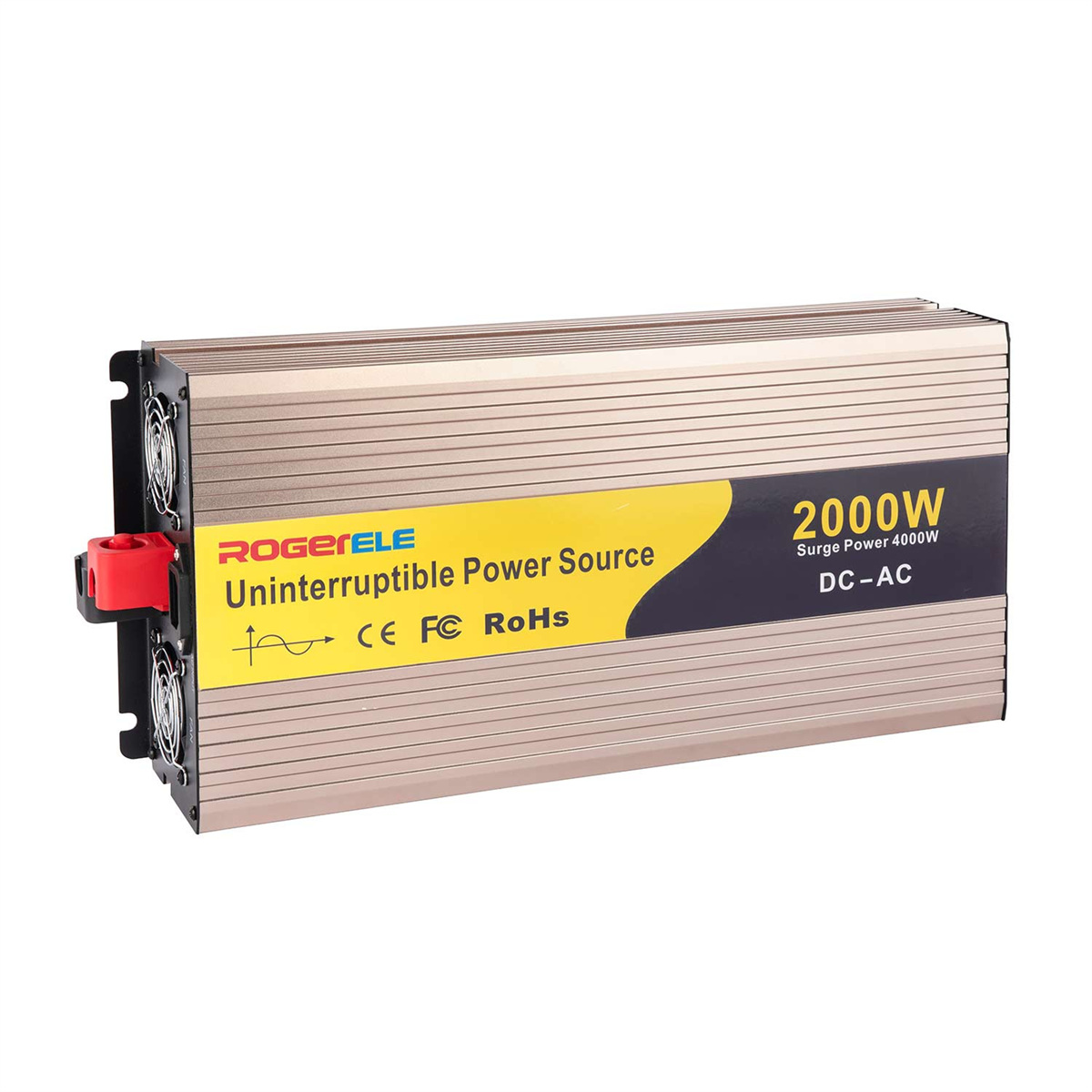
This guide compares LiFePO4 vs lead-acid with a Rogerele REP pure sine wave inverter or REPU inverter with charger (UPS). Related reading: home backup sizing, battery runtime, UPS vs hybrid, and inverter vs inverter-charger.
Why does battery chemistry matter with a pure sine inverter?
The inverter only turns DC into clean AC. Chemistry decides usable capacity, cycle life, weight, and safe charge voltages. Rogerele does not make batteries — treat the comparisons below as general practice and follow your battery maker’s BMS and charge settings.
On live REP / REPU pages, 12V models list about 10–15.5V input (24V: 20–31V; 48V: 40–61V), LV alarm near 10.5 / 21 / 42V, and LV protection near 10 / 20 / 40V. Max efficiency is about 90% / 91–92% / 93–95% by DC class. Unload current still drains the bank (e.g. under ~0.4A at 12V on REPU-1000, ~0.9A on REPU-2000, ~1A on REPU-3000) — switch the inverter off when idle.
How do usable DoD and cycle life compare?
Lead-acid deep-cycle (flooded, AGM, GEL) is often planned around ~50% DoD for longer life (general practice). LiFePO4 is commonly planned around 80–90% usable DoD with the BMS protecting the floor — so a 100Ah LiFePO4 bank usually delivers far more usable watt-hours than a 100Ah AGM of the same sticker rating.
Cycle life is chemistry-dependent (general practice, not a Rogerele lab claim): LiFePO4 often reaches thousands of moderate-DoD cycles; lead-acid deep-cycle frequently lands in the hundreds when cycled deeply. For frequent outages or daily cabin/RV use, lithium’s lifetime cost often wins despite a higher sticker price.
| Factor (general practice) | LiFePO4 | AGM / GEL / flooded lead-acid |
|---|---|---|
| Typical usable DoD planning | ~80–90% with BMS limits | Often ~50% for longer life |
| Cycle life under regular cycling | Usually much higher (thousands of cycles class) | Usually hundreds of deep cycles |
| Weight & space for same usable kWh | Lighter, more compact | Heavier; more volume |
| Charge profile | Needs LiFePO4 / lithium voltage setpoints; BMS required | Lead-acid absorption / float; flooded may need watering & venting |
| Cold weather | Many packs restrict charging below ~0°C unless heated | Capacity drops in cold; charging still possible with care |
| Upfront cost | Higher per Ah sticker | Lower entry price |
How do charge profiles and inverter LV cut-off interact?
Lead-acid wants multi-stage bulk / absorption / float at datasheet voltages. LiFePO4 wants a lithium profile (often little or no long float) plus a BMS. Mixing a lead-acid-only charger with lithium — or the reverse — commonly causes undercharge, stress, or early cut-off (general practice).
Inverter LV protection is a second limit. On Rogerele 12V REP/REPU pages, alarm is about 10.5±0.5V and shutdown about 10±0.5V. Lead-acid often should not be pulled that low for long life — many installers use a higher external LVD or a larger bank. LiFePO4 stays flatter then drops near empty, so cut-off can feel abrupt. Design for usable energy and cable drop, not for riding the absolute LV floor.
When should you pick REPU (inverter + charger UPS) vs a standard REP inverter?
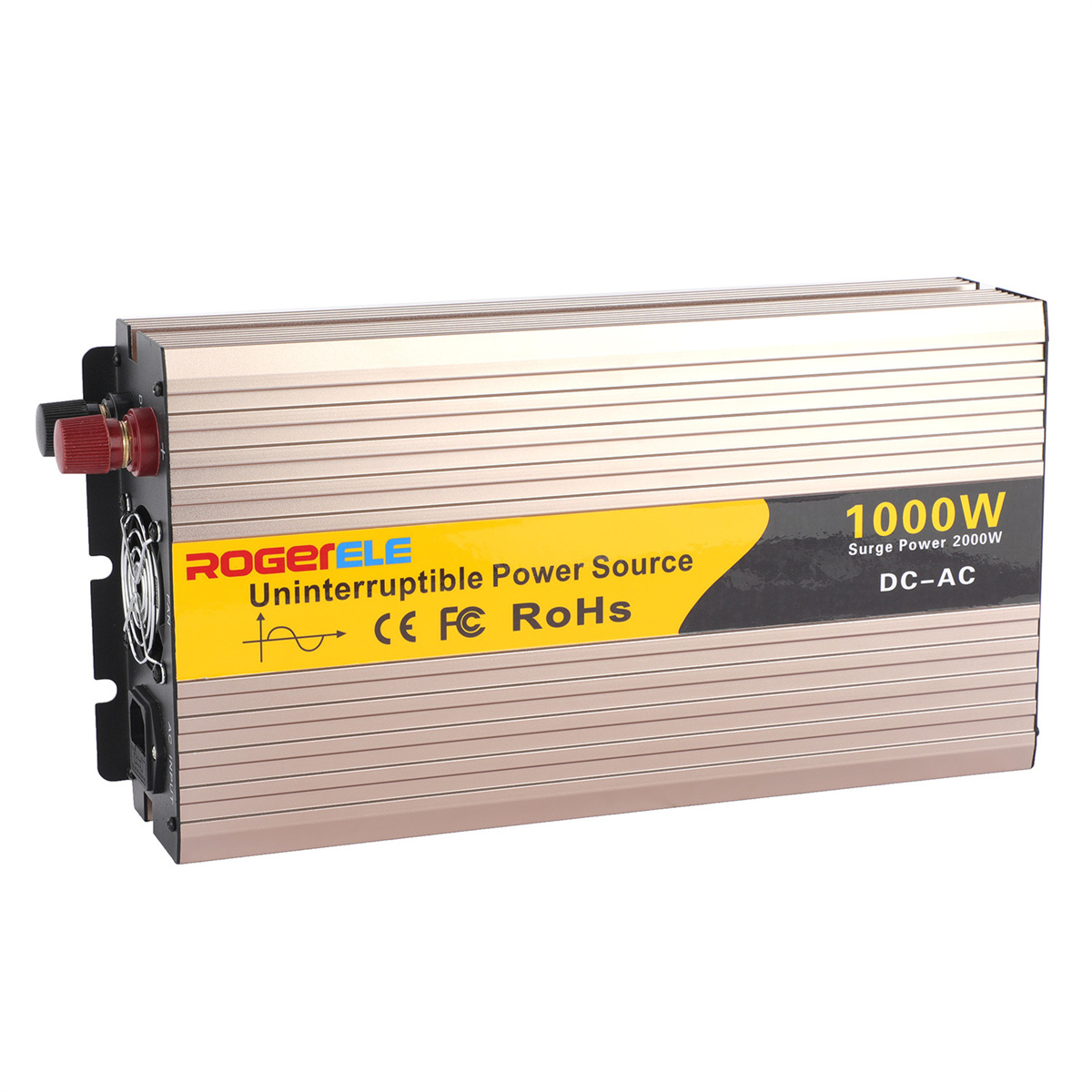
Choose a REPU inverter-with-charger when shore or utility AC is available and you want one box to power loads, charge the bank, and invert during an outage. Live pages list REPU-1000 (charge 20A / 10A / 5A on 12/24/48V), REPU-2000 (30A / 20A / 10A), and REPU-3000 (30A / 20A / 10A). Confirm those charge currents and recover voltages fit your LiFePO4 or lead-acid bank — Rogerele publishes inverter/charger limits; chemistry settings come from the battery maker.
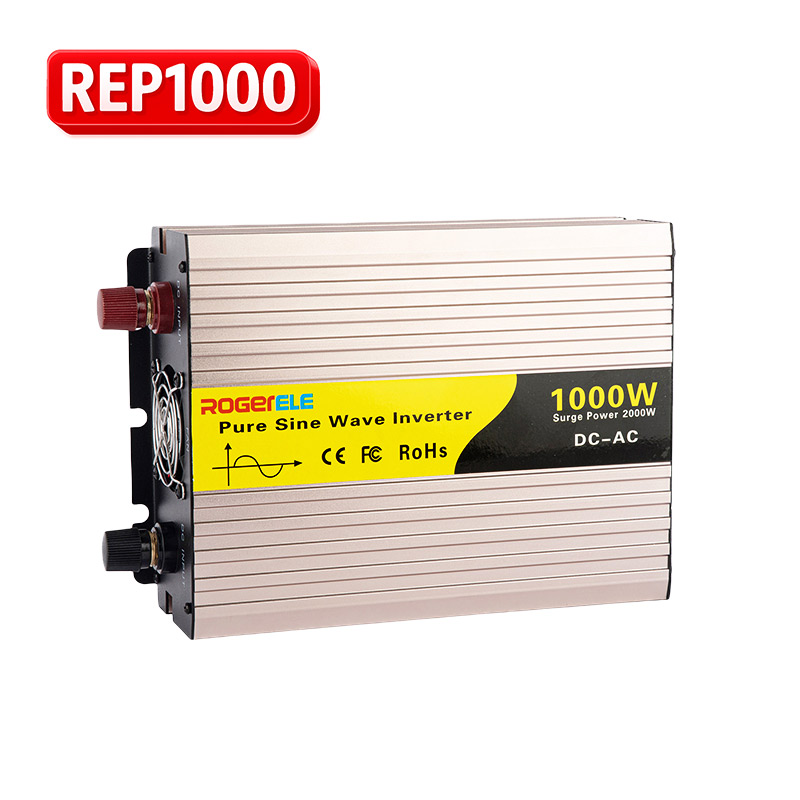
Choose a standard REP inverter when charging is separate: solar (MPPT vs PWM), a dedicated AC charger, or a vehicle DC-DC charger. Examples: 1000W REP and 2000W REP. Prefer pure sine for sensitive loads — see pure sine vs modified sine.
Weight, space, and cold-weather caveats
For the same usable kWh, LiFePO4 is usually much lighter and smaller — helpful in RVs and tight utility rooms. Lead-acid still wins on upfront price where venting and watering are acceptable.
Cold weather flips priorities (general practice): many LiFePO4 packs limit charging near or below 0°C unless heated. Lead-acid can often accept cold charge but loses capacity. Keep both bank and inverter in range — REPU-2000 working temperature is listed about −10° to +50°C; the battery has its own limits.
Which battery should you choose for inverter backup?
- Choose LiFePO4 for frequent cycling, limited space/weight, and higher usable DoD — with a lithium-capable charge path and BMS.
- Choose AGM/GEL for sealed, maintenance-light lead-acid when budget is the main constraint and cycling is occasional (standby backup).
- Choose flooded lead-acid only where venting, watering, and corrosion control are practical — often the lowest $/Ah sticker, highest upkeep.
- Match inverter class: REPU when you need built-in AC charging/UPS behavior; REP when solar or a separate charger owns the DC bus.
Wenzhou Rogerele Electronic Technology Co., Ltd. supplies pure sine REP and REPU inverters for these banks. Browse the UPS / charger category or contact us with load watts, runtime, and 12 / 24 / 48V.
FAQs
Can I use LiFePO4 with a Rogerele pure sine inverter?
Yes for the matching DC class (12 / 24 / 48V), with a lithium charge profile and BMS inside the inverter’s published input range (about 10–15.5V on 12V models). Confirm battery charge settings with the battery manufacturer.
Is AGM good enough for occasional home backup?
Often yes (general practice). For rare outages, size amp-hours for ~50% DoD plus ~90%+ inverter efficiency. For daily cycling, LiFePO4 usually lasts longer in usable energy terms.
Do I need an inverter-charger (REPU) or just an inverter (REP)?
Need automatic charging from shore/utility AC in the same unit? Look at REPU models such as 2000W inverter with charger (UPS). Already charging from solar or a separate charger? A standard REP inverter is enough.
Will the inverter’s low-voltage cut-off protect my lead-acid battery?
It stops near the published protect voltage (~10V on 12V models), which can be lower than many lead-acid life recommendations. Treat LV cut-off as equipment protection — size the bank or add a higher external disconnect if needed (general practice).
How do I estimate runtime for either chemistry?
Use usable amp-hours × battery volts × inverter efficiency ÷ AC watts. Lithium’s higher usable DoD is why the same sticker Ah often runs longer. Worked examples are in our battery runtime guide.
