
Car Power Inverters for South Korea: 220V 60Hz, 12V vs 24V and Sizing for 차박 Car Camping
Date:2026-09-26 Click:144 Source:Rogerele
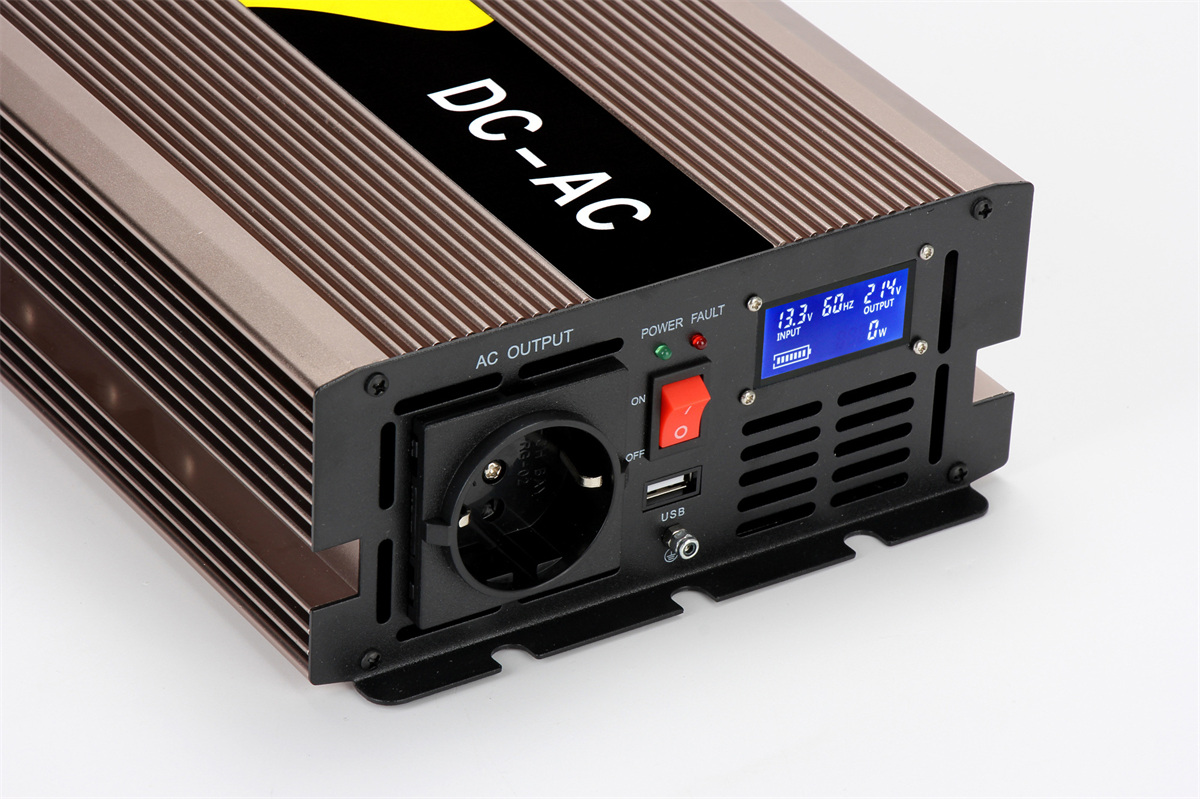
Quick answer: A car inverter for South Korea must output 220V at 60Hz, because that is the Korean household supply, and it should have a Type F (Schuko-style) socket, which also accepts Type C plugs. Its DC input must match the vehicle: most passenger cars and light 1-ton trucks run on 12V, while larger trucks and buses usually run on 24V. For 차박 (car camping) with an electric mat, laptop and small fridge, a 1000W pure sine wave inverter is a sensible size. Kettles, rice cookers and induction cookers need about 2000W or more and a battery connection sized for it.
What voltage and plug does an inverter for Korea need?
South Korea uses 220V, 60Hz mains power, and the standard outlets are Type C and Type F, both with two round pins. Type F is the grounded version found on most large appliances. For a car inverter sold in Korea, that means three things:
- 220V output. An inverter set to 100–120V will not run Korean appliances properly. Rogerele's REP models are built in 100/110/120VAC and 220/230/240VAC versions, so Korean orders should specify the 220VAC version.
- 60Hz output. Many 220–240V markets (Europe, China) use 50Hz, so a "220V inverter" is not automatically right for Korea. Timers, clocks, fans and some motor-driven appliances are designed around the local frequency. Rogerele's REP-series specifications list output frequency as 50Hz or 60Hz (±0.5Hz), so 60Hz should be written into the order.
- A socket Koreans can plug into directly. A Schuko-type (Type F) outlet takes both Korean plug types without an adapter. Universal sockets are common on export inverters, but a dedicated Type F outlet grips Korean plugs more securely.
Does my vehicle need a 12V or a 24V inverter?
The inverter's DC input must match the vehicle's electrical system. Korean inverter sellers commonly advise the split shown below, but always confirm the voltage from the battery label or the owner's manual.
| Vehicle type (Korea) | Typical system voltage | Inverter input to order |
|---|---|---|
| Passenger cars, SUVs, MPVs used for 차박 | 12V | DC12V (10–15.5V range) |
| Light 1-ton trucks and vans | Usually 12V | DC12V, but check the battery |
| Medium/heavy trucks, buses, construction equipment | Usually 24V (often two 12V batteries in series) | DC24V (20–31V range) |
| Camper conversions with a lithium house battery | 12V, 24V or 48V | Match the house battery |
Never connect a 12V inverter to a 24V truck. On Rogerele 12V models, over-voltage protection trips at 15.5V ±0.5V, so the unit will simply shut down. Also avoid drawing from only one battery of a 24V pair, because it discharges the two batteries unevenly. For a detailed sizing method and battery current tables, see our guide What Size Inverter for a Car or Truck? 12V vs 24V.
What size inverter do I need for car camping (차박) in Korea?
Car camping, or 차박 ("sleeping in the car"), is a popular way to travel in Korea, and the appliances people take are fairly consistent. The wattages below are typical ranges only, so check the label on your own device.
| Appliance | Typical running watts | Suggested pure sine wave inverter |
|---|---|---|
| Phone, tablet, camera chargers | 5–30W | 300W |
| Laptop, LED lantern, small fan | 20–100W | 300W |
| Electric mat / electric blanket (전기장판, 1–2 person) | 50–250W | 500W–1000W |
| AC compressor fridge / cooler | 60–150W (start-up surge) | 1000W |
| Small rice cooker (cooking) | 300–700W | 1000W–2000W |
| Electric kettle | 1000–1800W | 2000W–3000W |
| Single induction cooker | 1000–2000W | 3000W |
A simple rule: add up everything that runs at the same time, multiply by 1.25, and make sure the peak rating covers any compressor start-up. For an electric mat, laptop and fridge overnight, the Rogerele 1000W pure sine wave inverter (2000W peak) fits well. For phones and a laptop alone, the 300W model is enough.
Keep in mind that a car's starting battery is not built for deep discharge. Rogerele 12V units sound a low-voltage alarm at 10.5V and shut down at 10V, which protects the inverter but may leave too little charge to start the engine. For overnight use, fit an auxiliary deep-cycle or lithium battery.
Why choose pure sine wave for Korean appliances?
Many Korean appliances use electronic controls: digital electric mats with thermostats, microcomputer rice cookers, induction cookers and inverter-type fridges. These run best on a clean sine wave. Rogerele pure sine wave models specify THD <3% (linear load). Modified sine wave inverters cost less, but they are better kept for simple resistive loads.
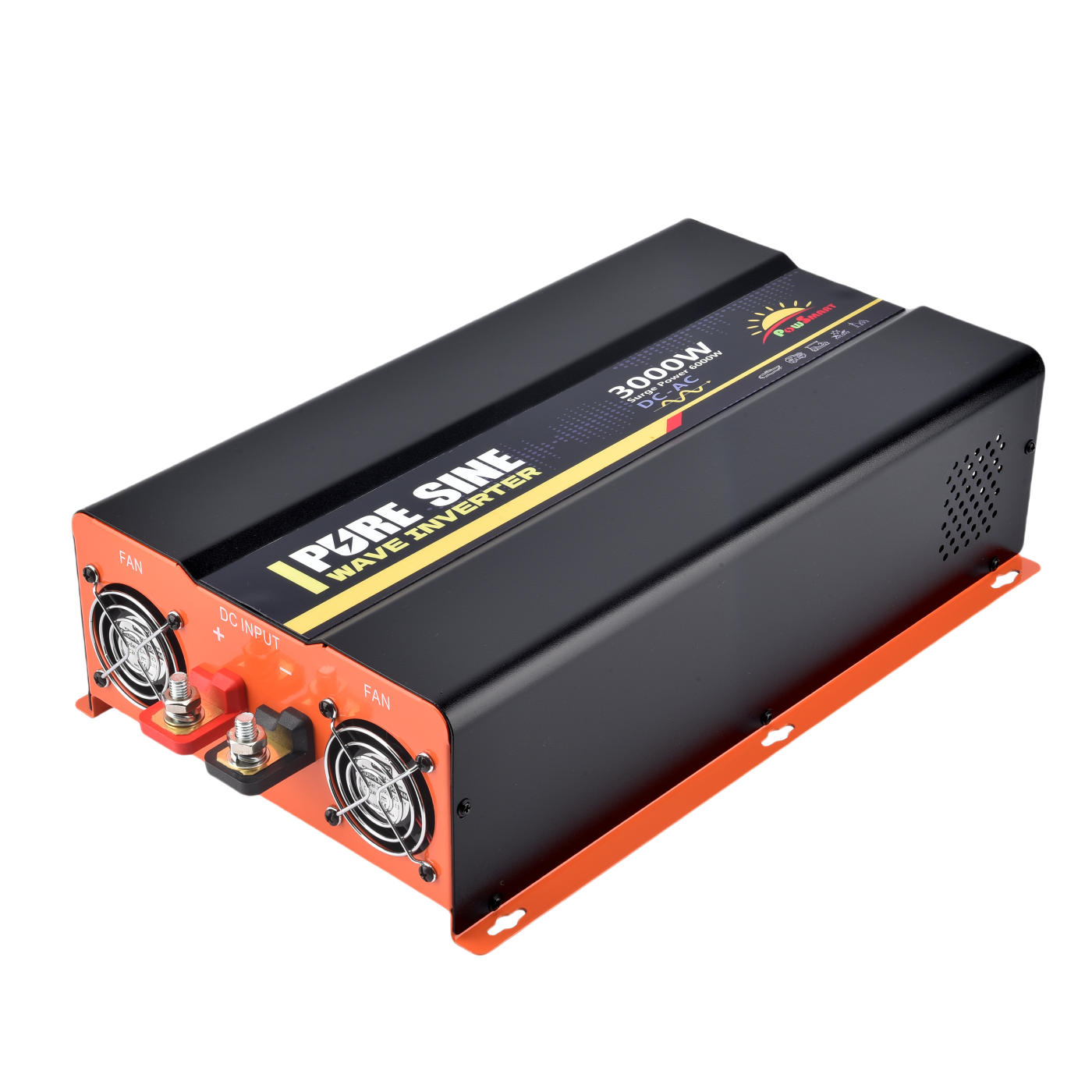
For truck sleeper cabs and work vans that need kettles or induction cooking, the REP3000-C (3000W rated, 6000W peak) is available with DC24V input, which draws half the current of a 12V system at the same power.
Do car inverters need KC certification to sell in Korea?
KC is Korea's mandatory safety mark for electrical products covered by the Electrical Appliances and Consumer Products Safety Control Act. Depending on risk, a product falls under Safety Certification, Safety Confirmation or Supplier's Declaration of Conformity. Testing is done by designated bodies such as KTL, KTR and KTC. Whether a particular car inverter is in scope depends on its design and intended use. Power conversion devices (전력변환장치) appear among the listed Safety Confirmation items, while products with a structure dedicated to installation in vehicles can be excluded. However, a portable unit that can also be used at home or in an office may be treated as in scope. Electromagnetic compatibility (EMC) is regulated separately. Importers should confirm the exact requirement for each model with a Korean certification body before launch, and Rogerele can supply samples and technical documents to support that process.
OEM and wholesale car inverters for Korean importers
Wenzhou Rogerele Electronic Technology Co., Ltd. is an inverter manufacturer in Yueqing, Wenzhou, China. It makes REP, REP-B and REP-C pure sine wave inverters, modified sine wave inverters, UPS inverters with charger, MPPT solar controllers, hybrid inverters and inverter PCBA boards. Korean distributors and brands can order 220V 60Hz output, 12V or 24V input, and OEM/ODM options. Standard REP models carry a 2-year warranty. Contact Rogerele for specifications, samples and wholesale quotes.
FAQ
Can I use a US 110V car inverter in Korea?
Not with Korean appliances. They expect 220V, and a 110V inverter will not power them properly. Buy a 220V 60Hz model with a Type F socket.
Is a 220V 50Hz inverter OK in Korea?
Chargers and many electronics accept 50Hz or 60Hz, but timers, clocks and some motors are designed for 60Hz. For the Korean market, specify 60Hz output.
What size inverter runs an electric mat for 차박?
Most 1–2 person electric mats draw roughly 50–250W. A 500W–1000W pure sine wave inverter works, ideally running from an auxiliary battery rather than the starting battery.
Can I run an inverter from the cigarette lighter socket?
Only small loads. The socket is typically fused at around 10–15A, which is about 100–150W at 12V. Wire larger inverters directly to the battery with a fuse.
Which inverter should I use in a 24V Korean truck?
Use a DC24V-input model, such as Rogerele's 24V versions with a 20–31V input range. Choose 2000W–3000W if you plan to boil water or cook.
